

Best Soundbars for Spring Sports Parties
🏆 Top Picks at a Glance
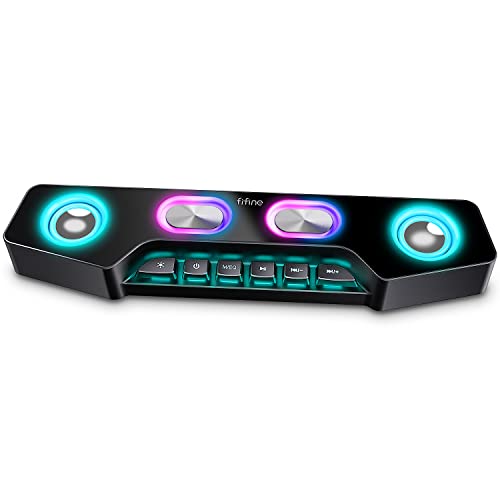 #1
#1
Best Overall
Fifine PC Speakers for Desktop, Bluetooth Computer Speakers Wireless for Gaming, Streaming, Party, E-Sport, RGB Loudspeaker with Aux-in Audio Jack, Controllable RGB, Volume Button A16 Black
$49.99
Check Price → #2
#2
Runner Up
Wireless Soundbar - Tabletop Audio Player,Home Audio Sound Bars | for Movie Enthusiasts Music Listeners Sports Fans Gamers Apartment Home Theater Living Room Bedroom Study
$16.09
Check Price → #3
#3
Best Value
Amazon Fire TV Soundbar, 2.0 speaker with DTS Virtual:X and Dolby Audio, Bluetooth connectivity
$99.99
Check Price →Our Top Picks
Affiliate disclosure: if you buy through these links, we may earn a commission at no extra cost to you.
Factors to Consider
Sound quality and speaker configuration
⚡ Quick Answer
When you’re feeding a crowd, you want bass that sweeps the room without turning into a boilover. Look for a wireless sub that can deliver deep, controlled bass (think 40 Hz and below) without blurring dialogue or other voices. A solid soundbar 2.1 or 3.1 setup with a dedicated center or well-tinished midrange helps speech stay clear during fast sports commentary while the bass roars with the crowd. Dolby Atmos can add height cues, but for a party, the real win is a cohesive, punchy mid-bass that makes roars feel instant and the announcers sound present.
Table of Contents
Room size and placement
Room size drives how you pair components and where to place the bar and sub. In small rooms (roughly under 150 square feet), a compact 2.0 or 2.1 setup can fill the space without boomy bass; in mid-sized rooms (150–400 sq ft), a 3.1 with a wireless sub often delivers more even impact. Large spaces benefit from a true multi-speaker system or a higher-end bar with better dispersion and a subwoofer that can be positioned away from walls for tight, non-flabby bass. Start with the bar under the TV and the sub a few feet from the wall for best balance, then tweak placement by listening to a loud sports scene and a quiet dialogue passage.
Connectivity and inputs
Having plenty of connection options makes it easier to keep all your gear working together. HDMI eARC (the higher-bandwidth successor to ARC) is ideal because it carries uncompressed audio and keeps lip-sync tight with TV apps. A mix of HDMI, optical, line-in, and Bluetooth Wi‑Fi options gives you flexibility to connect a turntable, a streaming device, or a phone without swapping cables mid-party. If you plan to add a turntable, ensure there is a line-in or analog input, or be prepared to use a separate preamp feeding into a line-in input.
Bass management, power, and expandability
Wireless subs offer placement flexibility, but result in real-world differences in how the bass lands in your room. Look for a system that lets you adjust sub level and crossover frequency so you don’t overpower dialogue during a game. Power matters, too: mid-range bars often push 200–400 watts total with a sub, whereas entry-level systems may sit around 100–150 watts. If you’re planning growth (streaming other rooms or adding front/surrounds later), choose a bar that supports multi-room setups and easy firmware updates.
Smart features and ecosystem compatibility
Smart features pay off when you want to queue up games, switch to music, or pull up a sports feed without fiddling with remotes. Look for AirPlay 2, Chromecast built-in, Spotify Connect, and voice assistant support if you want hands-free control. If you own a turntable or other analog gear, check for a simple app-guided calibration, room EQ, and robust app control so you can tune the system easily after you set it up.
Frequently Asked Questions
What’s the difference between 2.0, 2.1, and 3.1 soundbars?
2.0 bars have two built-in drivers and no dedicated sub; 2.1 adds a wireless subwoofer for more bass depth, while 3.1 adds a center-channel or enhanced midrange for clearer dialogue. For sports and parties, a 2.1 setup is usually a sweet spot, delivering punchy bass and still keeping speech intelligible in a lively room. If you want the best movie-night or game-with-fans clarity, a 3.1 or higher with good sub tuning is worth the upgrade.
Do I need a subwoofer, or can I get by with the bar itself?
In smaller rooms, a good 2.0 or 2.1 system can fill the space and keep things punchy without extra gear. In larger rooms or when you crave that cinema-scale bass, a wireless sub improves impact and fullness, especially on stadium cheers and explosions. If you’re shopping on a budget, prioritize a bar that includes a sub out or a strong built-in bass and plan to add a sub later.
Can I connect a turntable to a soundbar?
Most soundbars don’t have a dedicated phono stage, so you’ll typically need a phono preamp or a receiver with a line-level output. Some bars do offer a line-in input (RCA) that you can feed from a preamped turntable. If you routinely play records, look for a model with a proper analog input and a good DAC, or plan to route the signal through an external amp/preamp before the bar.
Is HDMI ARC/eARC really necessary?
HDMI eARC is a solid upgrade because it carries higher bandwidth audio and maintains lip-sync better than older ARC or optical setups, which matters when you’re syncing game audio with video. If your TV and bar both support eARC, you’ll get more faithful sound with less fiddling. If eARC isn’t available, Optical can still work well, but you’ll miss some high-fidelity formats and easier control via your TV remote.
What’s a good budget target versus value at mid-range or premium?
Under about $200–$250, you’ll find compact 2.0/2.1 bars that punch above their weight for casual listening and party chatter. In the $250–$600 range, you’ll get better dialogue clarity, stronger bass, and often a wireless sub and more input options. If you’re fine with a bigger voice from the room, and want Atmos or higher-fidelity passthrough, expect to spend $600–$1,000+; you’re buying more channels, better room calibration, and more robust wireless features.
Which connectivity should I prioritize for streaming and reliability?
Bluetooth is convenient for quick pairing but can add latency and compression, which matters if you’re watching video with chatter and fast action. Wi‑Fi streaming tends to be more stable and supports multi-room setups and higher-quality streams. For best overall reliability, choose a bar with HDMI eARC plus Bluetooth and a solid app ecosystem that lets you control EQ, input, and room calibration from your phone.
How do I optimize sound for a party room?
Start with the bar at ear level facing the seating area, and place the sub somewhere near a wall for strong, controlled bass. Use the system’s room calibration or a manual bass/crossover adjustment to avoid muddy dialogue during fast sports moments. Finally, test with a loud crowd soundtrack and a quiet announcer track, then fine-tune the balance so you hear both crowd roar and play-by-play clearly.


